
Aerospace startup Impulse Space just closed a $500 million Series D round to hire roughly 200 new engineers. The reason they’re recruiting humans instead of relying on AI says something important about where automation still hits a wall.
Key Takeaways
- $500 million Series D led by 137 Ventures and BANNER VC, with Founders Fund, Lux Capital, and Linse Capital
- ~200 new human hires planned to build in-space propulsion systems
- Company president Eric Romo explicitly states AI cannot replace the hands-on engineering loop
When $500 Million Goes to Salaries, Not Servers
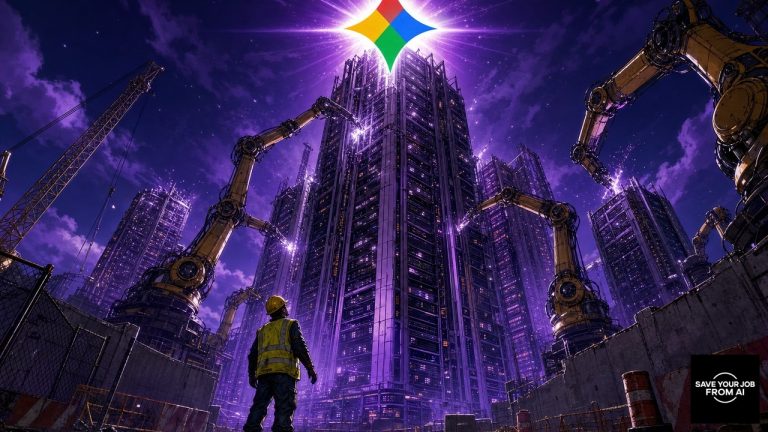
Impulse Space builds in-space mobility platforms: Mira, currently contracted by the U.S. Space Force, and Helios, a satellite delivery vehicle designed to bring payloads to precise orbits. The company was founded by Tom Mueller, the engineer who designed SpaceX’s Merlin engine.
With a fresh $500 million in the bank, the plan is straightforward: hire approximately 200 engineers, not license more AI tools. The round was led by 137 Ventures and BANNER VC, with backing from Founders Fund, Lux Capital, and Linse Capital.
Eric Romo, President and COO, spelled out the reasoning directly: “There’s not really any substitute for designing the thing, analyzing the thing, building it, and then getting it on the test stand.” This is the hardware engineering loop that AI coding assistants simply cannot complete. A model can write the software, but it cannot fire a rocket engine and observe what actually happens.
The company does use AI for software tasks. But the core of what Impulse Space does (precision propulsion hardware for orbital mechanics) still requires engineers who can hold a part, run a test, and iterate from physical evidence. That loop cannot be virtualized.

The Sectors Where Human Judgment Still Wins
Impulse Space is not the only organization making this argument. Across aerospace, semiconductor fabrication, civil engineering, and advanced manufacturing, the pattern repeats: AI accelerates the design and documentation phase, but physical validation still demands human expertise and physical presence.
The distinction matters. Automation has already eliminated entire categories of repeatable cognitive tasks in finance, legal review, customer support, and content production. The jobs being replaced share a common trait: the output can be fully evaluated without physical interaction with the world.
Hardware engineering sits at the opposite end of that spectrum. The test stand tells you something no language model can predict with full reliability. This is why $500 million goes to salaries in 2026, not just to compute. The investors backing Impulse Space (Founders Fund and Lux Capital) are not known for sentiment. They are making a calculated bet that human engineers remain the irreplaceable variable in a specific class of hard problems.
In the short term, this signals continued strong demand for experienced engineers in deep-tech fields. Salaries in aerospace, robotics, and advanced manufacturing are unlikely to fall despite the broader automation wave. Demand for people who can physically close the design-build-test loop is rising, not shrinking.
Also on Save Your Job:
- AI Job Market: The Real Numbers Behind the Panic
- Devin Writes 89% of Its Own Company’s Code. You’re Next.
- AI Backlash Is Here: Graduates Boo AI Speakers on Stage
What This Means for Your Job
The Impulse Space story carries a clear message: the jobs most protected from AI displacement are those where the output requires physical validation, not just digital approval. If your work lives entirely on a screen and its quality can be evaluated without leaving a desk, you are in the segment AI is actively targeting.
The mistake is to read this story as reassurance. “Even tech companies still hire humans” is not a reason to stop adapting. Impulse Space is hiring specialized engineers with irreplaceable physical expertise, not generalists. The middle layer of knowledge workers who perform tasks that are cognitive but not physically grounded is exactly the category absorbing the most pressure right now.
The question is not whether your industry still hires humans. The question is whether the specific tasks you perform are the ones that still require a human. That answer is changing faster than most job descriptions reflect. The professionals moving fastest right now are the ones who stopped waiting for their employer to tell them what to learn, and started building AI fluency on their own terms. [URL_FORMATION]
Follow the story on Save Your Job.
About the Author