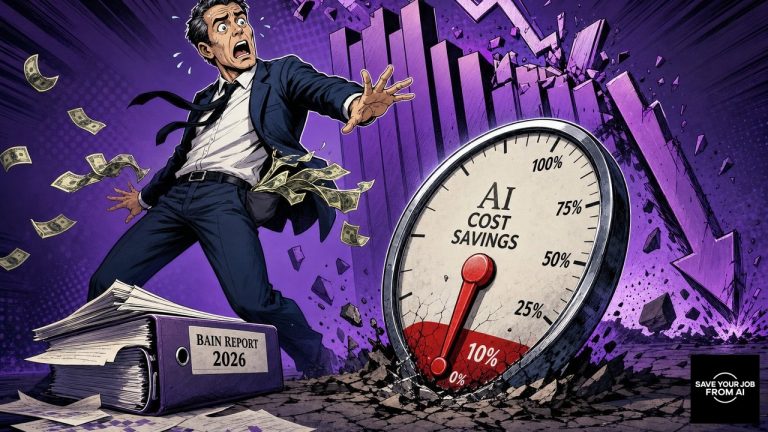
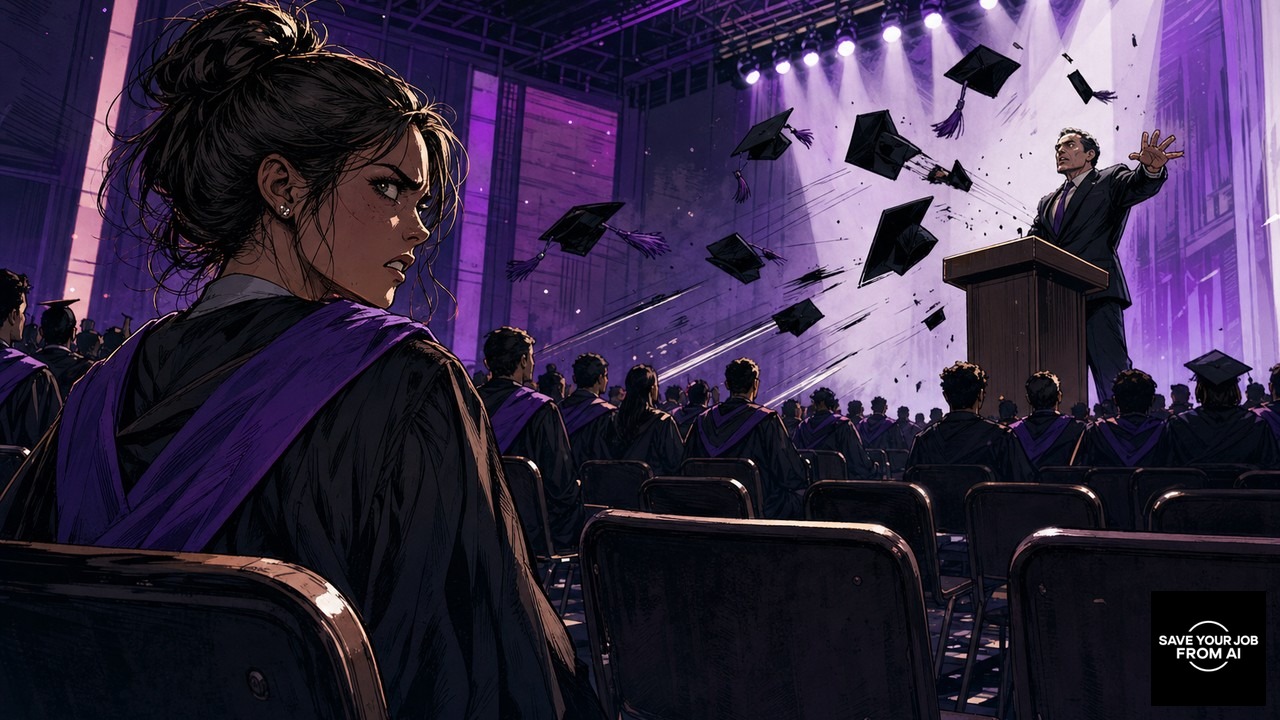
The AI backlash has arrived at graduation ceremonies. Former Google CEO Eric Schmidt was booed at the University of Arizona after urging graduates to embrace AI. Similar scenes played out at UCF and Middle Tennessee State University. Even Schmidt admitted the fears are “rational.”
Key Takeaways
- Graduates at multiple US universities booed AI speakers at 2026 commencement ceremonies, including Eric Schmidt at the University of Arizona
- Schmidt acknowledged that fears about disappearing jobs and a broken future are “rational”
- The AI backlash at graduations reflects broader anxiety about employment that data consistently confirms
What Happened at the Graduation Ceremonies
Commencement season 2026 produced a moment that no one in the AI industry scripted. Eric Schmidt, former CEO of Google and one of the most prominent advocates for AI adoption, took the stage at the University of Arizona graduation ceremony. He told the graduating class that their generation’s challenge was to help shape AI. The audience’s response: boos.
Schmidt’s wasn’t a one-off. The same scene played out at the University of Central Florida and Middle Tennessee State University, where graduates jeered at AI-themed speeches. These weren’t isolated protests from a handful of students. These were auditoriums full of people at the moment they officially entered the job market, expressing what they actually feel about their prospects.
What makes Schmidt’s appearance particularly significant is what he said in response to the boos. He did not push back or dismiss the reaction. He acknowledged that the graduates’ fears about disappearing jobs and a broken future were “rational.” That is a remarkable admission from someone who has spent years promoting AI investment and adoption. It is hard to tell people their fears are irrational when the data keeps proving those fears correct.
Actress and entrepreneur Reese Witherspoon also addressed the AI moment at a commencement event, with a different tone: telling women to embrace AI “or be replaced by it.” The message was meant as empowerment. The framing reveals exactly what is driving the AI backlash. When the best argument for adopting a technology is “use it or lose your job,” the resistance is not surprising.

Why These Graduates Are Right to Be Worried
The ceremony boos were not spontaneous emotion. They were the expression of something graduates have been experiencing for months. A 16% relative employment decline for workers aged 22 to 25 in AI-exposed fields. A 42.5% underemployment rate for recent college graduates. Hundreds of job applications before a single interview. These are not projections. They are Q4 2025 data.
The specific fields being hit hardest are the ones these graduates studied for: software development, customer service, programming, information systems. The entry-level positions that have historically been the first step into a career are the ones being removed first, because they involve the structured, repeatable tasks that generative AI handles best.
The AI backlash is not anti-technology. Most graduates understand that AI is not going away. What they are protesting is the gap between what they were told to prepare for and what they are finding when they arrive. They spent four years and significant money on degrees for roles that the market is quietly closing. The boos are not irrational. They are accurate.
Meanwhile, OpenAI has won court cases, raised record funding, and launched new enterprise partnerships. Anthropic is approaching a trillion-dollar valuation. The industry is doing extraordinarily well by every financial metric. The disconnect between industry performance and graduate employment outcomes is precisely what filled those auditoriums with boos.
Also on Save Your Job:
What This Means for Your Career Right Now
The AI backlash moment at graduations is a signal about where we are in the adoption curve. The people most directly affected by AI’s impact on entry-level jobs are now visible and vocal. The companies and industries that ignore this signal will face an increasingly difficult hiring environment as trust erodes further.
For working professionals, the graduation ceremony boos should function as a mirror. The anxiety those graduates are expressing is the same anxiety that hits everyone who watches AI capabilities expand while their own role description stays the same. The difference is that working professionals have something new graduates do not: time already spent building irreplaceable context and relationships at work.
The professionals who survive the current wave are not the ones who pretend AI is fine. They are the ones who take the threat seriously enough to act on it. The graduation ceremonies made clear that the next generation understands what is at stake. The question is whether the current workforce will move before the same pressure reaches them. Start building your AI-proof skill set before you find yourself in that auditorium: the resources to get started are here.
Follow the story on Save Your Job.
About the Author